Case Studies

Country diagnostics built for people who want the story, not the whole control rail.

Case Studies sit on top of the atlas as guided country narratives. They reuse the same public data, but focus on a few concrete questions: where the country sits, what kind of exposure profile it has, and which occupations, industries, and skills stand out.

Launch set

Start with Zambia and Kenya.

Zambia leads the first release, but the section launches with Kenya alongside it so the site reads as a comparative country layer rather than a single-country microsite.

Zambia case study preview
Live case study

Zambia

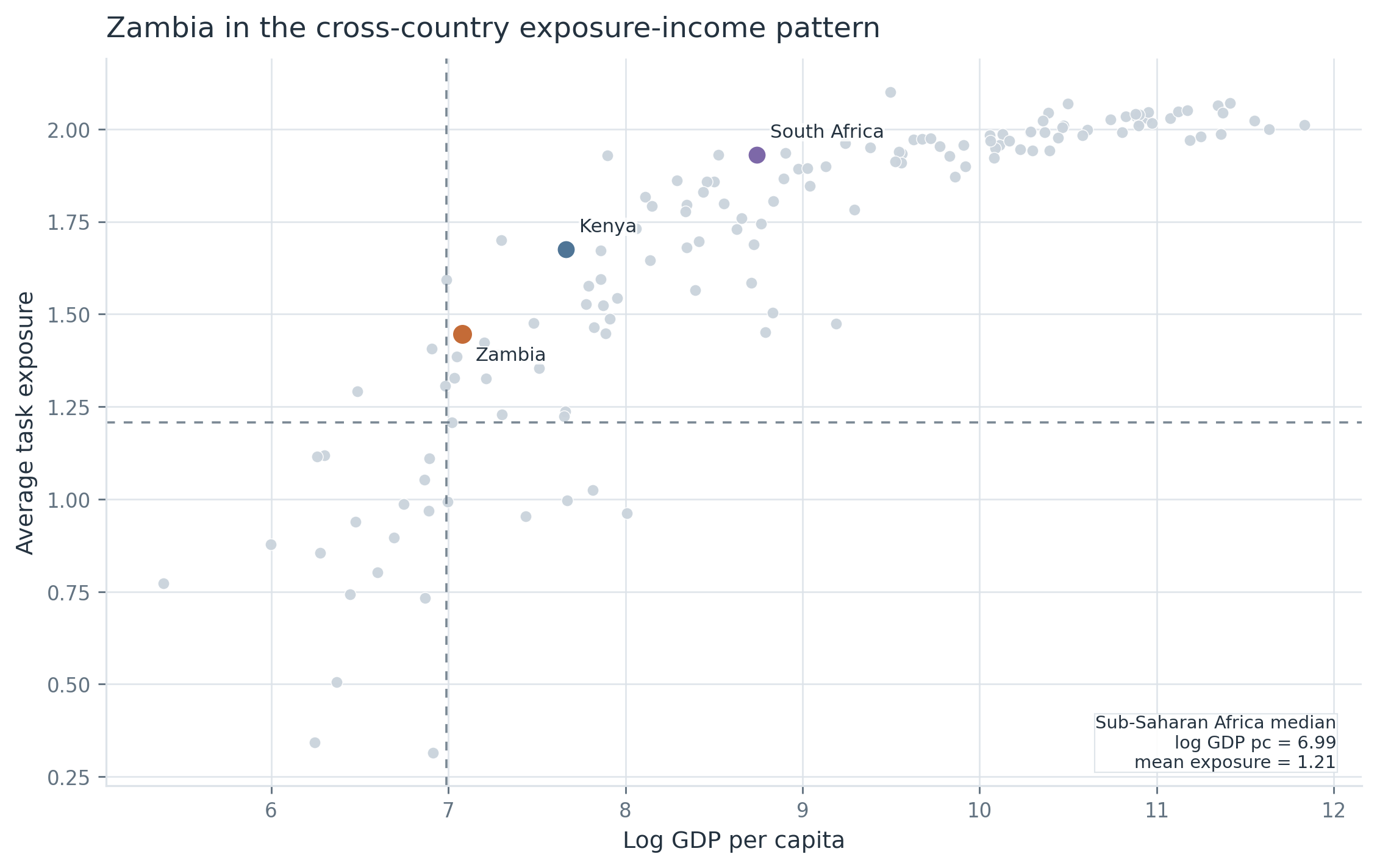
Zambia sits above the current Sub-Saharan Africa median on average task exposure, but its profile still leans more toward augmentation than substitution. The strongest signals are concentrated in clerical, accounting, and digitally mediated service work, with specialized domain tools and software-heavy tasks doing most of the work.

Open page
Kenya case study preview
Live case study

Kenya

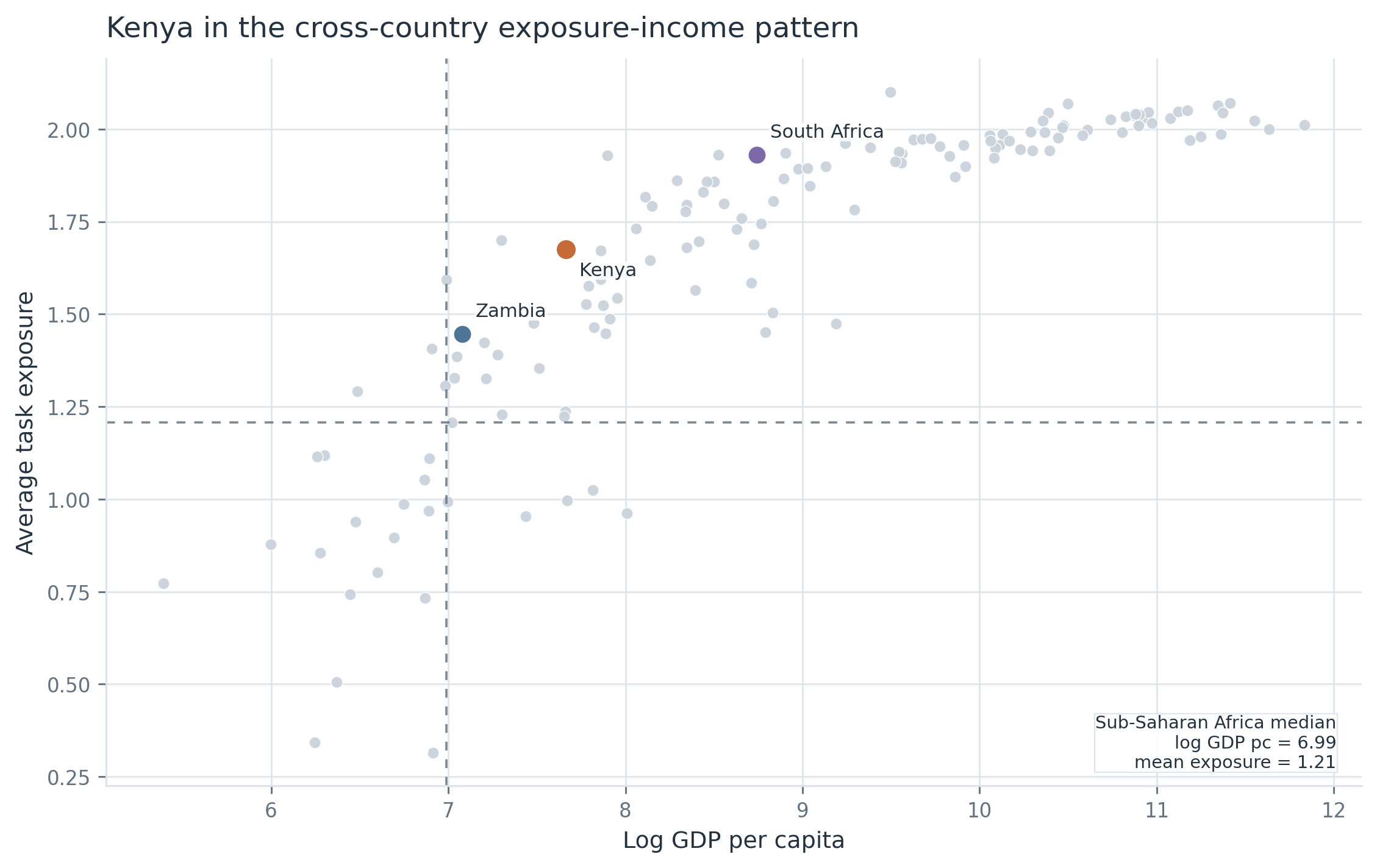
Kenya combines a higher average exposure level than Zambia with a similarly augmentation-heavy overall profile. The strongest signals again sit in administrative, clerical, and digitally mediated service work, making Kenya a natural comparative case for policy discussion in East Africa.

Open page

Coming next

More country diagnostics are already planned.

The next wave is intended to extend the same template to larger economies and other policy conversations, without changing the structure of the section.

  • India
  • United Kingdom
  • Italy
  • United States
  • China

How to use this section

Read the story here, then move into the explorer when you need more.

Each case study is meant to be a guided front door. From there, you can open the linked country profile, compare the country in World View, or download the supporting country note when one is available.

Country in context

See the country against a small peer set and a regional reference point.

What stands out

Move between occupations, industries, and skills without leaving the page.

Methods boundary

Keep the page policy-facing while staying explicit that the results are descriptive, not causal.